

Autism Spectrum
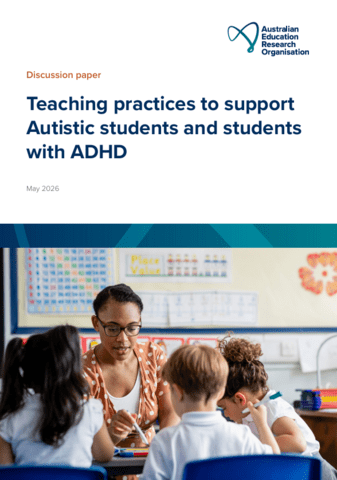
Discussion paper
Teaching practices to support Autistic students and students with ADHD
This discussion paper synthesises research on evidence-based teaching practices that support Autistic students and students with attention deficit/hyperactivity disorder (ADHD) with learning in school settings. It outlines what the current evidence for these cohorts of students indicates, what’s emerging and the implications for policy and practice in Australian schools.
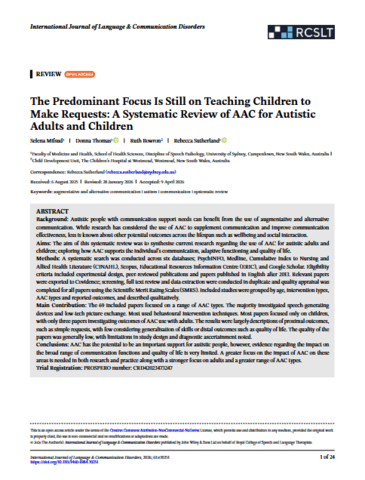
Journal article
The predominant focus is still on teaching children to make requests: a systematic review of AAC for Autistic adults and children
This systematic review synthesises research on augmentative and alternative communication (AAC) for Autistic adults and children. It explores how AAC supports the individual's communication, adaptive functioning and quality of life. The article calls for more research on the impact on the broad range of communication functions and quality of life, especially among Autistic adults.
Report
Policy responses to rising Autism diagnoses in childhood
Autism Spectrum Disorder (ASD) diagnoses among children and young people have risen two to fourfold across OECD countries, largely due to improved detection. While this increases demand for disability and health supports, it can improve outcomes. The report finds wide variation in supports and a shift towards basing entitlement for support on the needs of...
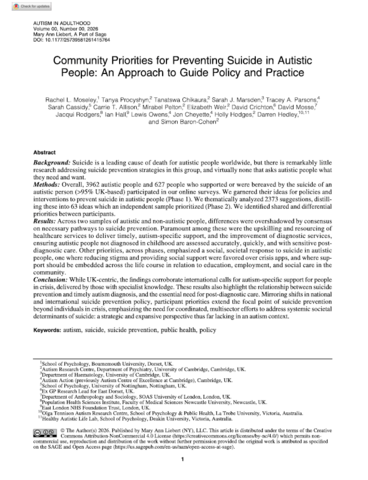
Journal article
Community priorities for preventing suicide in autistic people
This article describes the findings from online surveys of autistic people and supporters examining ideas for policies and interventions to prevent suicide in autistic people. Findings highlight the need for upskilling and resourcing healthcare services to deliver autism-specific support at times of crisis and beyond.
Guide
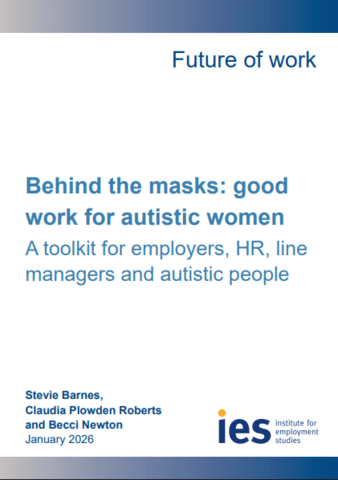
Behind the masks: good work for autistic women
This toolkit explores what good work means for autistic women and how employers can build genuinely inclusive workplaces. Drawing on in‑depth interviews, it shows many women are underdiagnosed, misunderstood, and often mask traits, leading to stress and burnout. It offers key insights, case studies and recommendations to embed personalised support, inclusive attitudes and informed leadership.