

Low socioeconomic status
Report
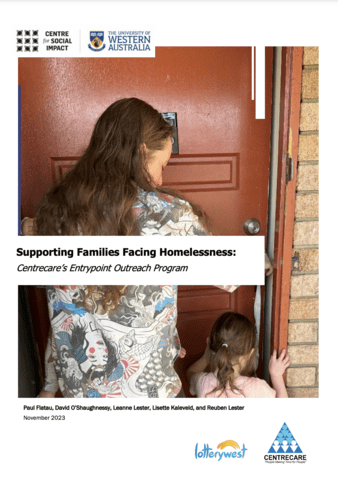
Supporting families facing homelessness: Centrecare's Entrypoint Outreach Program
Centrecare’s Entrypoint Outreach Program (EPO) was a preventative early intervention pilot funded by Lotterywest designed to divert families and individuals from homelessness into housing. The brief intervention (2–6 weeks) targeted families who were newly homeless or were at immediate risk of homelessness in a very tight rental market.
Guide
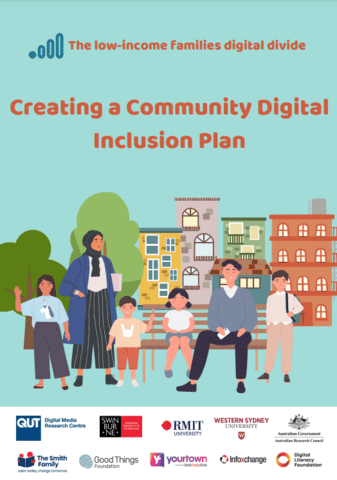
The low-income families digital divide: creating a Community Digital Inclusion Plan
Digital inclusion means people have the ability to afford quality connections and appropriate devices that enable them to participate in society in the ways they want. This guide will take you through the process of working out your community’s digital needs and wants, along with how to involve others in your journey to a digitally...
Report
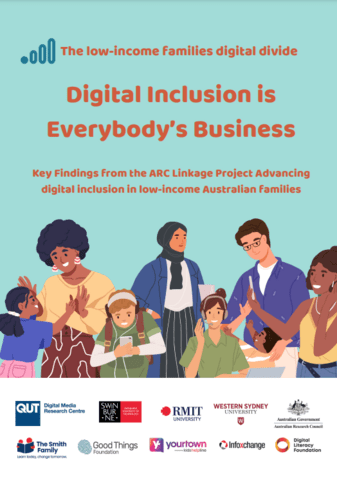
The low-income families digital divide: digital inclusion is everybody’s business
There is no current 'digital inclusion safety net' supporting low-income families. Researchers working on this project argue that improving digital inclusion for low-income families requires coordination and collaboration between a variety of stakeholders, including community organisations, schools, universities and local, state and federal governments.
Report
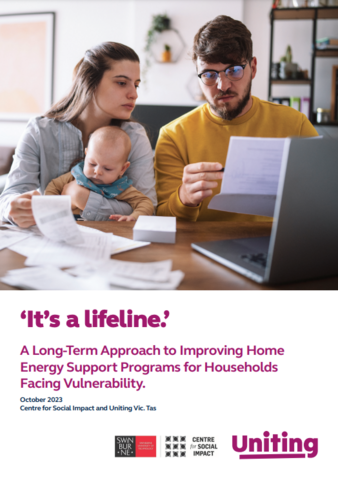
‘It’s a lifeline’: A long-term approach to improving home energy support programs for households facing vulnerability
Energy Efficiency Services, such as that offered by Uniting Vic.Tas, work with individuals and families on low-incomes and those experiencing energy hardship. This research project sought to understand the benefits and gaps of the Uniting Energy Support Service to determine ‘what works’ and what actions are needed to address the drivers and effects of energy...
Report
Poverty and Australian housing: findings from an Investigative Panel
This research investigates the key links between housing and poverty. Its purpose is to draw together different dimensions of the relationships between housing costs and poverty, including policy settings, tax and transfer systems, housing assistance and place-based dimensions and individual capabilities.