

 SHARE
SHARE
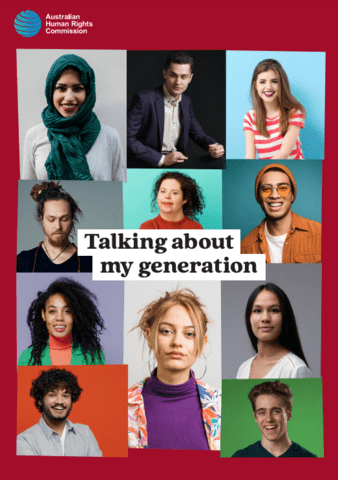
Talking about my generation

Discussions about ageism are often focused on negative stereotypes and discrimination against older people, but young people also experience negative attitudes and assumptions based on their age. This research sought to enrich the insights from the Commission’s 2021 What’s age got to do with it? report by providing a detailed understanding of how young people in Australia perceive their age and generational identity, the factors that shape these views, and how they relate to the perceptions older generations hold of young people.
This report presents the findings from a week-long online discussions held in February 2021 with 12 participants aged between 18 and 25. The online community sessions revealed four key themes as priorities for the cohort commonly referred to as ‘Gen Z’ or ‘Generation Z’.
Key findings:
- The young adults in the study have high expectations for themselves when it comes to financial management and believe they are trying their best in a difficult economic environment. They report becoming frustrated and disillusioned when long-term goals such as buying a house seem out of reach.
- Participants have a strong sense of social responsibility and want to make a positive impact in the world. They see their generation as being engaged in social issues such as the environment, mental health, human rights, and equality.
- The young people in the study have mixed feelings about the significant role social media and technology play in their lives. They acknowledge the many positives of social media such as its ability to provide a platform for people to express themselves and to bring people together to create positive change. But they also see how it is used to divide people, promote consumerism, and perpetuate idealised and unrealistic standards.
- Many see their generation as affected by poor mental health, symptoms of which may be mistaken for laziness or hypersensitivity, while some participants feel actions such as self-care are misinterpreted as being self-indulgent and selfish.
