

Suicide
This resource contains information about suicide which may be upsetting to some people.
 SHARE
SHARE
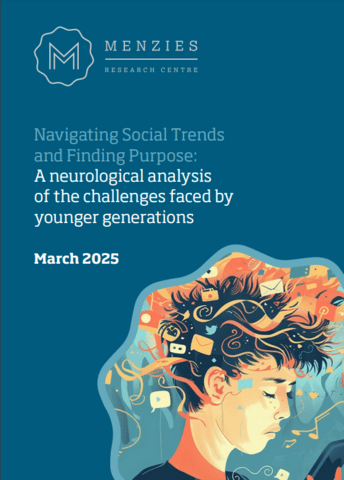
Navigating social trends and finding purpose: a neurological analysis of the challenges faced by younger generations

This paper identifies a drastic deterioration in mental health for Generation Z and collates global research outcomes to explore the social and neurological factors driving the crisis. It highlights the increase in mental health issues, screen time, and addiction among young people alongside a decrease in their sense of purpose and community.
The report explores the role of dopamine in driving addictive behaviours related to internet use, social media, pornography, and nicotine. It presents data on screen time, social media usage, and the consumption of artificial dopamine sources, highlighting their impact on brain development and function.
Key findings
- 25% of young people globally are experiencing clinically elevated depressive symptoms, and 20% are experiencing clinically elevated anxiety.
- 46% of females aged 16-24 are diagnosed with a mental disorder.
- Since 2012, psychological distress in females between the ages of 15 and 19 has increased by 52%.
- More than 28% of females aged 16-24 have self-harmed in their lifetime.
- 58% of young adults reported lacking 'purpose' in life.
- A pervasive sense of hopelessness experienced by young people increased by 40% in the 10 years up to 2020.
- Suicide is the fourth leading cause of death among young people.
