

Disability inclusion
Alternative labels
Disability confidence
Disability responsiveness
Disability inclusiveness
Disability inclusive
Inclusive disability
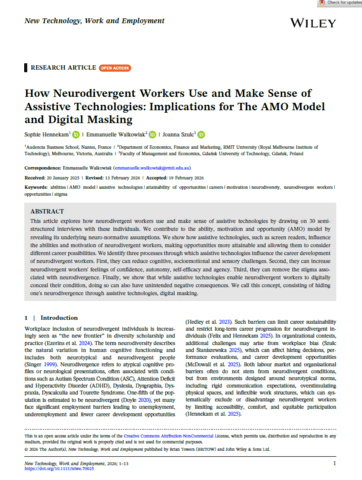
Journal article
How neurodivergent workers use and make sense of assistive technologies
Assistive technologies reshape how neurodivergent workers experience ability, motivation, and opportunity. Tools like screen readers reduce cognitive, sensory and socioemotional challenges, boost confidence, autonomy and agency, and lessen stigma. They also enable digital masking – concealing neurodivergence – which can expand opportunities but may create unintended negative consequences.
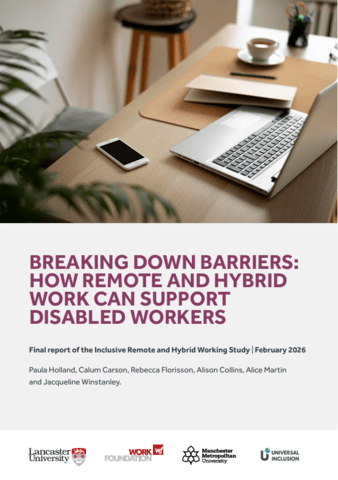
Report
Breaking down barriers: how remote and hybrid work can support disabled workers
This report finds that people with disability in the UK express a strong preference for remote or hybrid work, and positive impacts on their health, employment and personal circumstances. It makes policy recommendations for government and employers to promote flexible work options for people with disability.
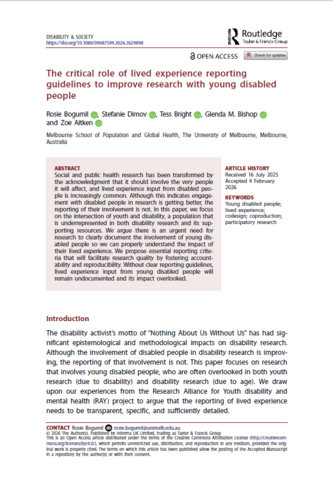
Journal article
The critical role of lived experience reporting guidelines to improve research with young disabled people
Social and public health research should involve the people it will affect. This article finds that while engagement with disabled young people in research is getting better, the reporting of their involvement is not. Essential reporting criteria are proposed to promote research quality by fostering accountability and reproducibility.

Report
AI to support neurodivergent learners in vocational education and training
Artificial Intelligence (AI) and other advanced technologies could support neurodivergent learners in vocational education and training settings, including in work-based learning and apprenticeships, and the transition to work. This report explores the use of these technologies by learners with Autism Spectrum Disorder, Attention-Deficit/Hyperactivity Disorder, dyslexia, dyscalculia and dysgraphia, and by teachers and trainers catering for...
Report
Creating inclusive courts and tribunals
This report is designed to guide service inclusion improvements for courts and tribunals that recognise the needs of people with disability. It includes disability-aware and disability-inclusive practices, screening approaches, judicial guidelines, and specialised court programs, drawing on both evaluative data and good practice principles.