

Students
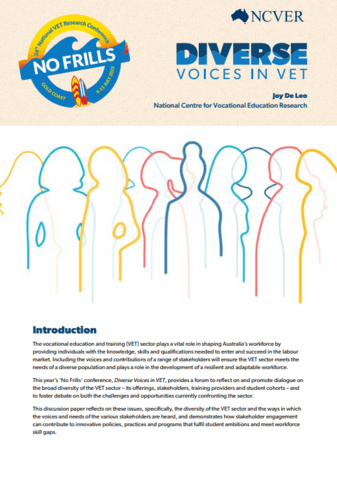
Discussion paper
Diverse voices in VET
This discussion paper focuses on the broad range of stakeholders in Australia’s vocational education and training (VET) sector, in particular the three key ones: industry, registered training providers, and VET students and apprentices. The paper discusses the needs and interests of each stakeholder, how these are met and some of the challenges faced.
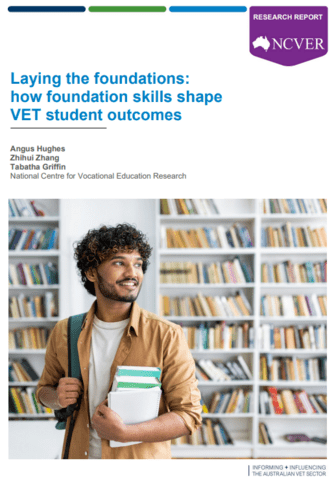
Report
Laying the foundations: how foundation skills shape VET student outcomes
This research explored the relationship between foundation skill learners’ characteristics and outcomes, and how foundation skills programs contribute to learners’ vocational education and training (VET) outcomes, employment and further study. It found that students enrolled in foundation skills alongside another VET program were more likely to complete their VET program.
Report
Reality Now: tobacco and vaping report
This report presents findings on tobacco and vaping behaviours among Australian secondary school students. While actual use remains low, students overestimate how many of their peers engage in these behaviours, which can influence decision-making. Considerations from the findings for teachers, students and parents/carers are provided.
Report
Climate anxiety in pre-adolescent children
This report examines the psychological impact of climate change education on primary age children, arguing that the current approach is cognitively inappropriate and ethically questionable. It calls for a shift toward developmentally appropriate, psychologically safe and empowering environmental education. The report provides recommendations for policy and practice.
Briefing paper
Mastery and application: students develop and demonstrate mastery of their learning
This explainer outlines how students develop mastery by consolidating knowledge – storing and strengthening it in memory through practice and review – enabling them to solve unfamiliar problems, think critically and creatively, and generate new representations and applications of their understanding.