

Disability employment
Alternative labels
Inclusive employment
Video
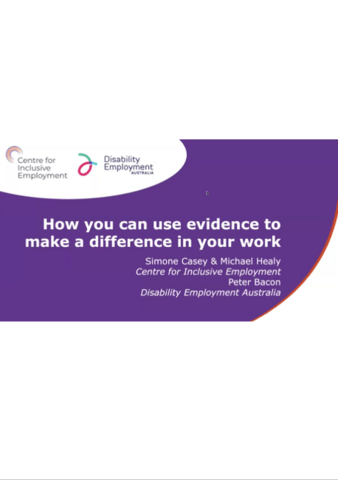
Lunch & learn: how you can use evidence to make a difference in your work
This recorded webinar focuses on how research and data-driven evidence can be practically applied to improve employment services and life outcomes for people with disability. The presenters highlight common barriers and offers practical strategies to overcome them. Overall, the message is that embedding evidence‑based practice improves real‑world outcomes.
Guide
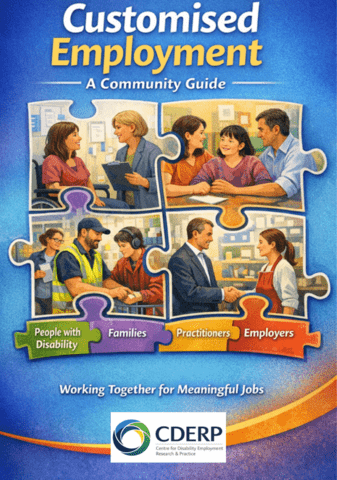
Customised Employment: A community guide
This community guide explains Customised Employment in Australia, outlining its purpose, key steps and the conditions needed for quality practice. It shows how employment can be created around a person’s strengths through thoughtful, person‑centred discovery and job design. By promoting informed choice and higher expectations, the guide reinforces that well‑matched work helps people, businesses and...
Report
Australia’s disability strategy 2021–2031 outcomes framework: 4th annual report
This report provides an overview of the progress made on outcomes for people with disability in 2025. The framework covers seven outcome areas: employment and financial security, inclusive homes and communities, safety, rights and justice, personal and community support, education and learning, health and wellbeing, and community attitudes. The report shows mixed outcomes.
Guide
Disability discrimination and the workplace
A practical guide outlining the rights of people with disability at work and employers’ responsibilities to ensure fair, inclusive employment. It explains the requirement to assess applicants on their ability to perform essential job tasks and the legal duty to provide reasonable adjustments such as modifying recruitment, equipment or work practices unless this causes unjustifiable...
Guide
Behind the masks: good work for autistic women
This toolkit explores what good work means for autistic women and how employers can build genuinely inclusive workplaces. Drawing on in‑depth interviews, it shows many women are underdiagnosed, misunderstood, and often mask traits, leading to stress and burnout. It offers key insights, case studies and recommendations to embed personalised support, inclusive attitudes and informed leadership.