

First Peoples
Alternative labels
First Nations people
Indigenous
Indigenous peoples
Report
Social and emotional wellbeing: a review
The paper introduces the social and emotional wellbeing (SEWB) model and provides an overview of its key features, including Aboriginal and Torres Strait Islander selfhood, SEWB domains, determinants of health, and expressions and experiences of SEWB. It presents the challenges in effective implementation and provides recommended best practice approaches.
Report
'Are you waiting for us to die?' The unfinished business of Bringing Them Home
This report has found only 6% of the Bringing Them Home report recommendations – made to support Stolen Generations survivors and their families almost 28 years ago – have been clearly implemented. It recommends a National Healing Package of priority changes to enable remaining elderly survivors to live out their days with dignity.
Report
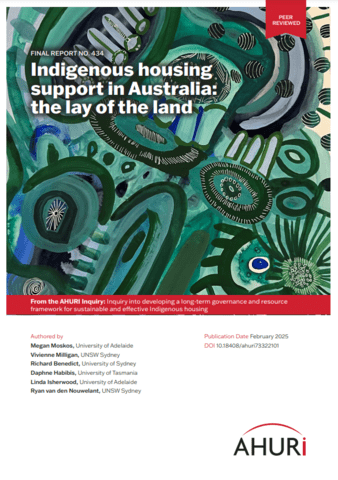
Indigenous housing support in Australia: the lay of the land
This report provides a comprehensive overview of the current Indigenous housing system in Australia to support development of future policies. The research looked at how Indigenous housing is managed, funded and regulated in Australia and ways to support Indigenous Australians in making their own decisions about their housing.
Strategy
First Nations strategy 2025–2030
This strategy outlines the actions the Department of Climate Change, Energy, the Environment and Water will take to progress reconciliation within the organisation. Its five key outcomes seek to incorporate the expertise of First Nations people into the department's policy, program and regulatory work while creating a culturally supportive environment for First Nations staff.
Briefing paper
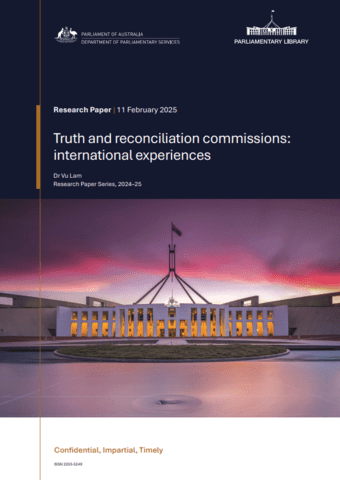
Truth and reconciliation commissions: international experiences
This paper examines international experiences with truth and reconciliation commissions (TRC), focusing on case studies from South Africa, Canada and Norway. International experience demonstrates the potential of TRCs to foster public dialogue, validate lived experiences and recommend structural changes.