

Culturally and Linguistically Diverse (CALD)
Alternative labels
Culturally and linguistically diverse
Non-English speaking background
NESB
Report
Tackling racial harassment in higher education
The recommendations outlined in this report are the product of an advisory group convened by Universities UK in October 2019, and come just over a year after the UK Equality and Human Rights Commission uncovered widespread evidence of racial harassment on university campuses.
Report
The experience of Asian-Australians during the COVID-19 pandemic: discrimination and wellbeing
The aim of this paper is to document the changes in outcomes for Asian-Australians from January 2020 to October 2020, comparing the change in outcomes to the rest of the Australian population. In addition, the authors compare how attitudes of the total Australian population towards Asian-Australians compare to attitudes more generally.

Report
The housing aspirations of Australians across the life-course: closing the ‘housing aspirations gap’
This report explores the housing constraints facing diverse populations of lower income Australians and to establish how existing and innovative housing solutions can support their shelter and non-shelter aspirations across the life-course from young adulthood to later-life.
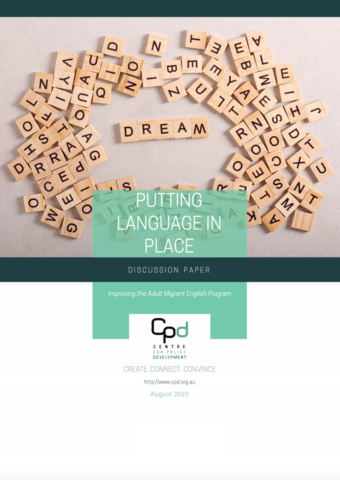
Discussion paper
Putting language in place: improving the Adult Migrant English Program
This paper provides important context for the changes to the Adult Migrant English Program (AMEP) announced by the federal government this month, which include expanding eligibility to accessing the AMEP and relaxing the timeframe in which people can access this support. It builds on conversations with senior officials, experts and communities over many months about...
Report
Who gets to tell Australian stories?
This report provides the first comprehensive picture of who tells, frames and produces stories in Australian television news and current affairs. It spotlights the experiences and representation of culturally diverse television news and current affairs staff. It is also the first forensic examination of how our media treats cultural diversity at the workplace level.