

Monitoring and evaluation
Alternative labels
Government performance
Monitoring and Evaluation Framework
Evaluation
Guide
Reimagining evaluation: a guide to evaluating differently
A practical guide for anyone who wants to approach evaluation in an inclusive and meaningful way. The guide offers easy-to-use tools that can be applied straight away. It provides examples and reflections to help rethink what evaluation can be, and how it can strengthen projects, partnerships and relationships with communities.
Report
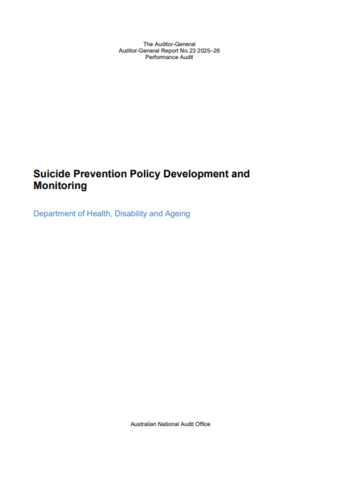
Suicide prevention policy development and monitoring
Suicide is the leading cause of death for Australians aged 15 to 44 years. From 2022–23 to 2025–26, the Department of Health, Disability and Ageing administered 41 suicide prevention measures. This report finds that four to five years after several national agreements, objectives to reduce suicide have not been achieved.
Guide
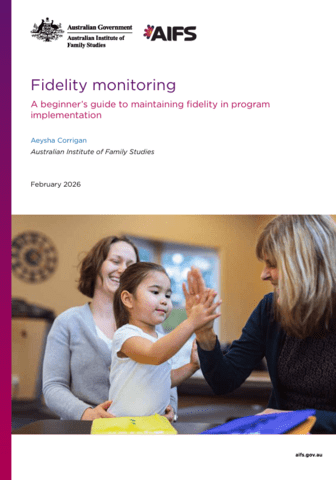
Fidelity monitoring: a beginner’s guide to maintaining fidelity in program implementation
The term 'program fidelity' refers to how closely the delivery of a program follows its original design and the developer's intentions. This guide explains the key elements of program fidelity and monitoring. It covers why it is important for program or service delivery as well as how practices can be implemented, maintained and adjusted.
Working paper
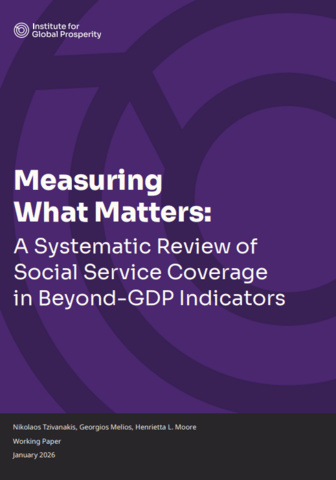
Measuring what matters: a systematic review of social service coverage in Beyond-GDP indicators
This working paper provides a systematic assessment of Beyond-GDP indicators between 1972 and 2023, examining whether the frameworks adequately capture social services. The findings establish that Beyond-GDP measurement inadequately captures dimensions central to welfare state investment, providing an evidence base for developing more comprehensive social service evaluation frameworks.
Strategy
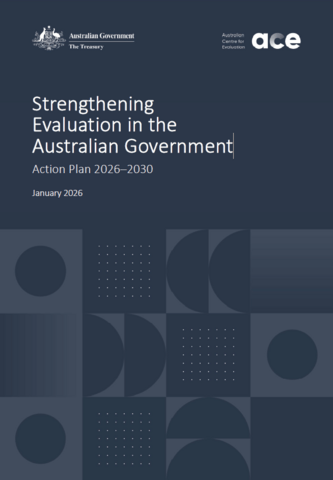
Strengthening evaluation in the Australian Government: Action Plan 2026–2030
This action plan commits to embedding and strengthening high‑quality evaluation across the Australian government. It guides decision‑making, supports continuous improvement, enhances accountability, and ensures programs are designed and delivered to achieve meaningful outcomes. The plan outlines 14 actions structured around four interconnected priorities to build a more effective, evidence‑informed public sector.