

Policy and program evaluation
Alternative labels
Program evaluation
Report
Maintain the momentum: three yearly report to Parliament on the progress of prevention 2022-2024
The report captures Victoria's progress to prevent family violence, gendered violence and violence against women between January 2022 to December 2024, analysing: positive progress and change; enablers of and barriers to prevention work; emerging trends and evolving practices; and opportunities and recommendations for further action and investment. It makes 15 recommendations to the Victorian Government.
Evaluation
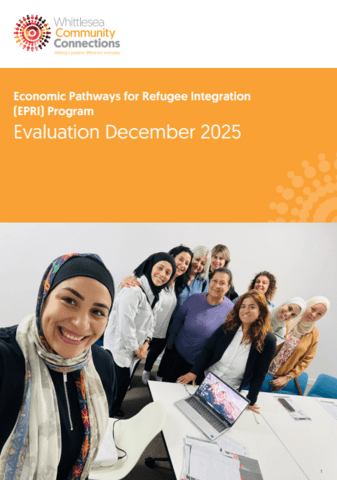
Economic Pathways for Refugee Integration (EPRI) program
An evaluation of the Economic Pathways for Refugee Integration (EPRI) program, delivered in Victoria, Australia. EPRI helps participants improve English language skills, build confidence and develop job readiness. The evaluation covers the period February 2023 to June 2026 and focuses on how the program supports refugees and humanitarian entrants to access employment and strengthen economic...

Report
Understanding public awareness of BetStop in Australia
BetStop is one of the Australian Government's key policy responses to mitigate online gambling harms. However, this study found awareness of the initiative, is low relative to the rise in online gambling participation and harm. The findings suggest targeted public awareness campaigns are needed to improve awareness of BetStop among specific population groups.
Journal article
The case for reorienting active labour market policies towards the demand‐side
Since the 1990s, Australia, like other OECD countries, has deployed active labour market policies (ALMPs) to assist unemployed individuals into employment. This article argues that a reorienting of ALMPs towards the demand side is urgently required and proposes a blueprint to take this forward.
Systematic review
Communities that care: toolkit technical report
This report presents findings from a mixed methods systematic review of the Communities That Care (CTC) prevention system, which is designed to reduce youth problem behaviours by empowering local stakeholders to implement evidence-based interventions. It contains robust, policy-relevant insights into the conditions under which CTC is most effective.