

Neurodiversity
Alternative labels
Neurodivergent
Neurological diversity
Description
A non-pathological explanation of variations in mental functions [Wikidata]
Guide
Neurodiversity data at work
This guide outlines how to measure and report workforce neurodiversity in a respectful, safe and accurate way. It explains how collecting neurodiversity data can strengthen workplace neuroinclusion and presents six guiding principles to support effective, ethical and trustworthy data collection practices.

Report
Neuroinclusion as imagination: from 'knowing for' to 'imagining with'
This paper argues that current neuroinclusion efforts in education, employment and public policy remain dominated by compliance‑led, deficit‑oriented models that position professionals as experts ‘knowing for’ neurodivergent people. It reconceptualises neuroinclusion as a participatory, imaginative practice where lived experience guides co‑designed policy, enabling more adaptive, just and future‑focused institutions.
Report
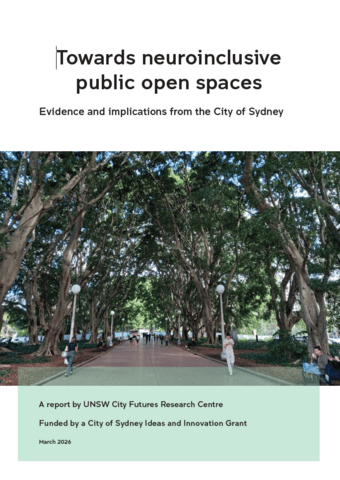
Towards neuroinclusive public open spaces: evidence and implications from the City of Sydney
This report examines how neurodivergent adults experience Sydney’s public open spaces and identifies environmental factors that shape participation. Drawing on lived‑experience insights, it highlights how sensory load, predictability, legibility and supportive amenities influence comfort and inclusion. The findings provide practical guidance for strengthening urban policy, planning and design.
Journal article
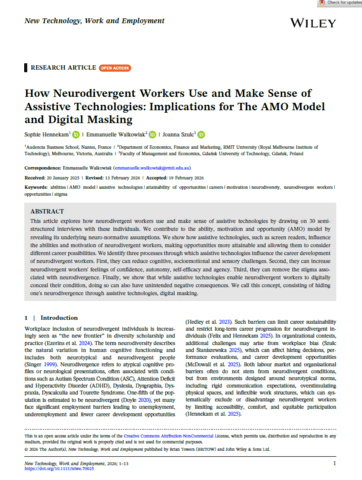
How neurodivergent workers use and make sense of assistive technologies
Assistive technologies reshape how neurodivergent workers experience ability, motivation, and opportunity. Tools like screen readers reduce cognitive, sensory and socioemotional challenges, boost confidence, autonomy and agency, and lessen stigma. They also enable digital masking – concealing neurodivergence – which can expand opportunities but may create unintended negative consequences.

Report
AI to support neurodivergent learners in vocational education and training
Artificial Intelligence (AI) and other advanced technologies could support neurodivergent learners in vocational education and training settings, including in work-based learning and apprenticeships, and the transition to work. This report explores the use of these technologies by learners with Autism Spectrum Disorder, Attention-Deficit/Hyperactivity Disorder, dyslexia, dyscalculia and dysgraphia, and by teachers and trainers catering for...