

Education equity
Alternative labels
Education inequity
Educational equity
Access to education
Report
The building divide in Australian schools: how capital funding fuels educational inequity
This report reveals a deep and growing divide in school infrastructure funding in Australia. Over the past decade private schools have outspent public schools on capital works by $38 billion. The report finds this inequity is fuelled by the lack of federal funding for capital investment in public schools. It provides six recommendations for the...
Discussion paper
Australia’s private high school problem: unequal, expensive and falling behind
Australia has one of the world’s most privatised high school systems. This paper reveals that Australia is the most expensive place in the developed world for families to send a child to high school. It finds there is no evidence that the significant expense of privatised school education has boosted Australia’s education performance.
Report
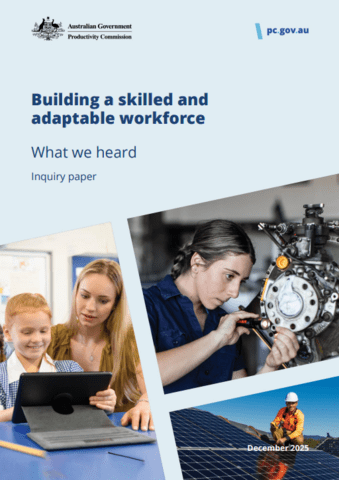
Building a skilled and adaptable workforce: inquiry report
A skilled and adaptable workforce is a core driver of productivity. This inquiry focused on recommendations to enhance the productive capacity of the workforce by providing more Australians with opportunities to learn and work.
Submission
Submission: Australia’s youth justice and incarceration system
This submission highlights how the Australian youth justice system is failing children and young people through early exclusion at school, missed disability support, unsafe detention practices and inconsistent access to education. The submission calls for strong Commonwealth leadership to set enforceable national standards that protect children’s rights and safety across all jurisdictions.
Report
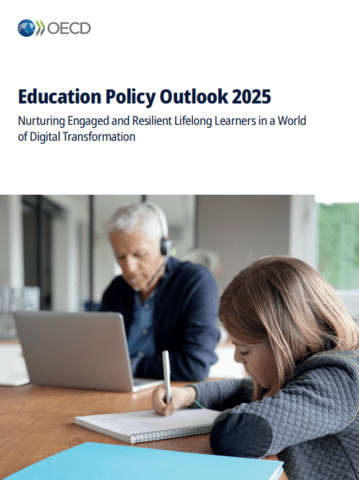
Education policy outlook 2025
This report explores how countries and economies can strengthen individuals’ agency as lifelong learners. Drawing on analysis of policies across 35 education systems, as well as international evidence and policy developments, the report explores how countries design and implement lifelong learning policies. It identifies four critical life moments when individuals are particularly open to learning.