

Urban planning
Alternative labels
Urban policy
Urban design
City planning
Urban development
Urban areas

Report
The Activity Centre Program is redistributive
The Victorian Government has been releasing more details about their housing policy: the Train and Tram Zone Activity Centres. This paper explores the program in the context of equity. It finds that through a focus on building in established areas, the program is an opportunity to redistribute wealth and means to a greater number of...
Report
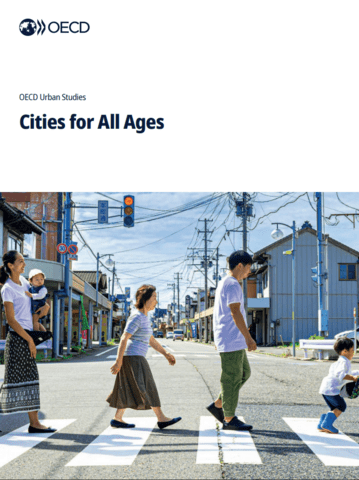
Cities for all ages
This report provides a structured approach for governments at all levels to develop and strengthen policies to build age-inclusive cities. It makes recommendations around inclusive urban planning, age-targeted housing solutions, tailored services and job opportunities, producing age-specific data, and sharing good practices through multi-city collaborations.
Report
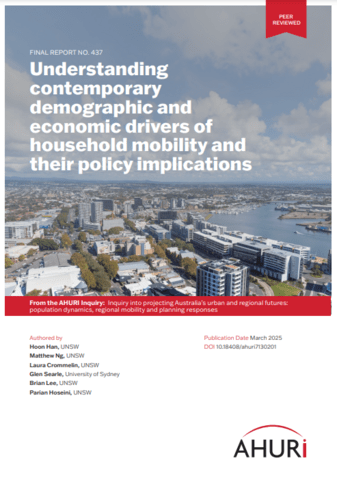
Understanding contemporary demographic and economic drivers of household mobility and their policy implications
This research looked at why people move between urban and regional Australia, and identified the social, economic, demographic and policy factors driving these population shifts. Apart from 2013, since 2007 more people have moved from capital cities than to them. The report concludes that policies to attract regional migration can be improved.
Report
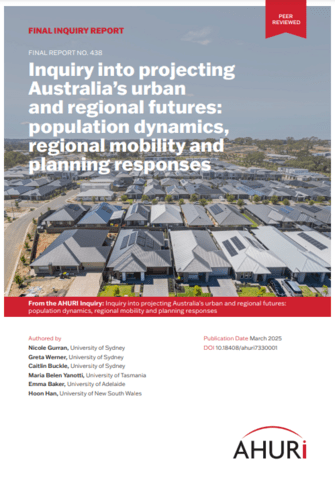
Inquiry into projecting Australia’s urban and regional futures: population dynamics, regional mobility and planning responses
This research investigates different ways to predict local population growth and change. It looks at what drives people to move between urban and regional Australia and what this migration means for planning infrastructure and housing to support population growth and change.
Report
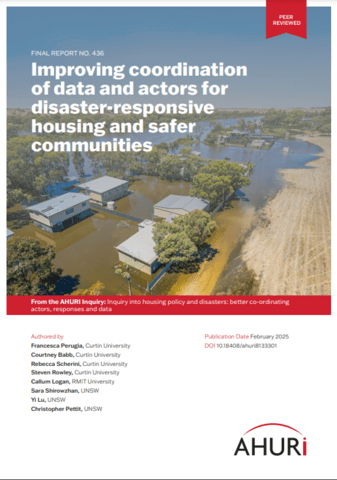
Improving coordination of data and actors for disaster-responsive housing and safer communities
This research examines how governments and organisations involved in planning and delivering housing use data to assess risks associated with flooding, bushfires and cyclones. It explores ways to use and share data better in order to reduce the impact of disasters.