

Public finance
Report
Counting what matters: how to classify, account and track spending for prevention
This paper analyses the current constitutional and operational framework for a new classification of public expenditure. The aim is to identify expenditure and encourage the ‘shift to prevention’. It considers three expenditure areas in the United Kingdom: health, homelessness and children’s social care. By differentiating between everyday spending and preventative spending, the government could measure...
Report
Budget monitor: soft landing, hard truths
The report provides independent projections of the Federal Budget, including detailed estimates of future spending and revenues. It forecasts an underlying cash deficit $5.2 billion worse than estimated in the 2024-25 budget. This is a significant deterioration from the $15.8 billion surplus in 2023-24.
Working paper
A counterproductive tax cut? How size-based payroll taxes can create a roadblock to firm growth
This report questions whether payroll taxes affect firm growth by examining a recent cut in South Australia’s payroll tax rate for small businesses. The tax cut may have been counterproductive because it introduced a sharp increase in tax rates for firms with payrolls between $1.5m and $1.7m which made it less attractive for firms to...
Discussion paper
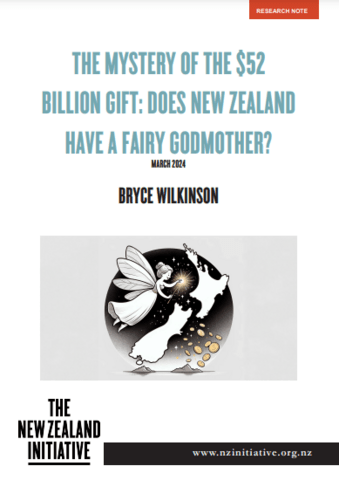
The mystery of the $52 billion gift: does New Zealand have a fairy godmother?
This research note questions how New Zealand has managed to sustain its large and growing current account deficits with the rest of the world without seeing a corresponding deterioration in its net international investment position (NIIP).
Report
Public savings from non-public schools
This paper argues the Australian taxpayer is much better off when non-government schools receive public funding. The authors calculate the savings from all Australian non-government schools, both Catholic and Independent, for the year 2023.