

 SHARE
SHARE
AI systems in teaching and learning: principles and practical examples
| Attachment | Size |
|---|---|
 AI systems in teaching and learning: principles and practical examples AI systems in teaching and learning: principles and practical examples
|
732.98 KB |
The rapid popularisation of artificial intelligence (AI) systems signifies a major shift in teaching and learning, bringing both new opportunities and significant challenges. This document provides guiding principles and practical examples for using AI in teaching and learning. The guidance outlined in the document is applicable in a range of international contexts and school settings.
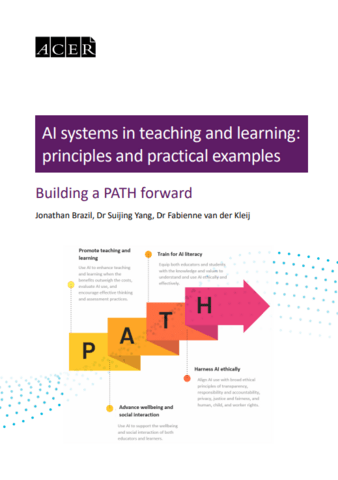
To introduce the principles, a human-centred approach is put forward – this is an approach where technology is designed and used in ways that prioritise human interest. This human-centred approach is embodied in the PATH principles proposed in this document to ensure the ethical and effective integration of AI systems into teaching and learning.
Practical examples of AI applications are provided to highlight not only the diverse types of education-specific AI systems but also how generative AI can be employed to support teaching and learning. From adaptive learning platforms to AI-driven content creation, the possibilities are vast, but they also require thoughtful implementation aligned with the PATH principles and awareness of challenges.
PATH principles
- Promote teaching and learning
- Advance wellbeing and social interaction
- Train for AI literacy
- Harness AI ethically
