

Communications
Alternative labels
Mass communication
Communications media
Communications policy
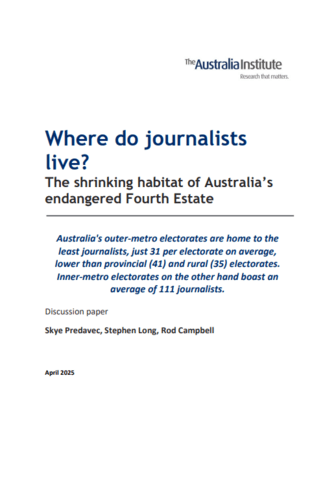
Discussion paper
Where do journalists live?
Where journalists live has implications for the public and for the health of democracy. This paper identifies in which electorates Australia’s journalists live and whether these electorates are inner-metropolitan, outer-metropolitan, provincial or rural. It finds that more journalists live in electorates classified as inner-metropolitan than outer-metropolitan, provincial and rural electorates combined.
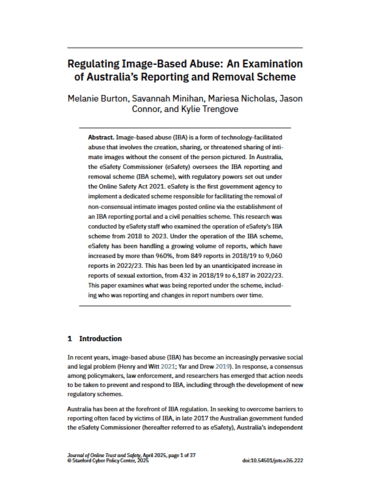
Journal article
Regulating image-based abuse: an examination of Australia’s reporting and removal scheme
This research examines the operation of eSafety’s image-based abuse scheme from 2018 to 2023. It finds that the scheme has increasingly helped remove harmful content and enabled Australian victims of image-based abuse to access expert assistance, regain control over their situation and to receive practical support to help them feel safer online.
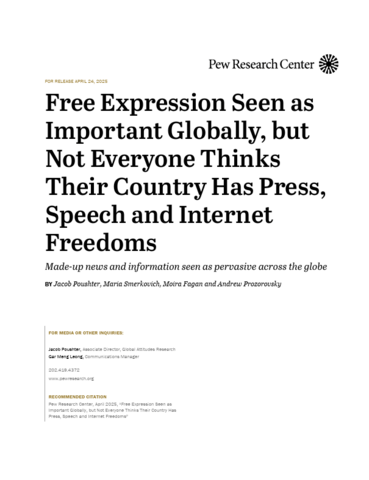
Report
Free expression seen as important globally, but not everyone thinks their country has press, speech and internet freedoms
This report focuses on public opinion of free speech, freedom of the press and freedom on the internet in 35 countries across the world, including Australia. Results show that in 31 of the 35 countries, the share of people who value free speech is larger than the share who believe they have it, and there...
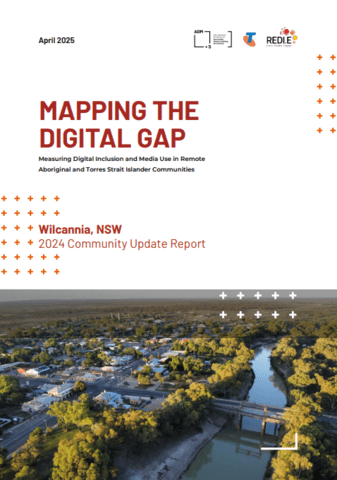
Report
Mapping the digital gap: Wilcannia, NSW 2024 community update report
This report outlines updated findings on digital inclusion in Wilcannia to assist with understanding and addressing the barriers to digital inclusion in remote communities. It highlights improvements in some indicators but declining mobile phone access and internet affordability issues.
Research Summary
Cost of connectivity: consumer attitudes to concessional broadband
This research summary highlights strong public support for a concessional broadband service. The introduction of this service is supported by 69% of Australians, with support highest among low-income households, those in financial difficulty, retirees and those with disability or health issues.