

Working conditions

Report
Productivity in the real world: what it is, what it isn’t, and how to make it work better for workers
Claims that Australia faces a productivity crisis are overblown, this report argues. It presents evidence showing productivity growth in recent decades has not been equally reflected in higher real wages and better living standards. Proactive measures to lift wages and living standards are needed if stronger productivity growth is to support stronger living standards.
Report
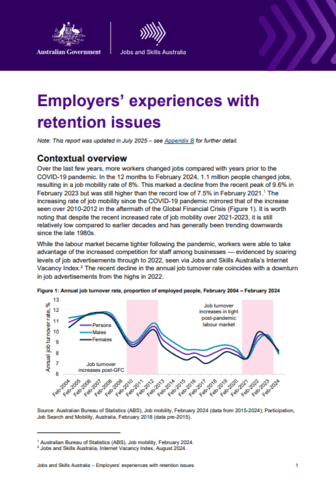
Employers’ experiences with retention issues
This report highlights the topical issue of employers’ experiences with retention issues providing insights across industries and occupation groups. It provides an overview, staff replacement rates, reasons for replacing staff, impacts on businesses and strategies used to retain staff. It finds that high staff turnover is hurting productivity and pushing up recruitment and training costs.
Briefing paper
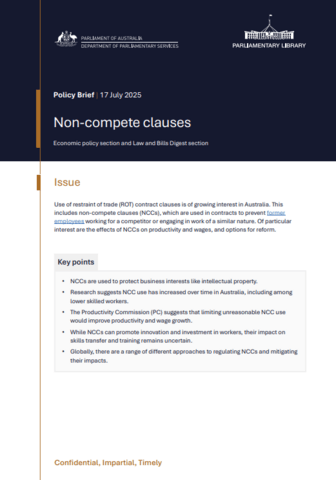
Non-compete clauses
Use of restraint of trade contract clauses is of growing interest in Australia. This includes non-compete clauses (NCCs). Of particular interest are the effects of NCCs on productivity and wages, and options for reform. This paper sets out the context, the arguments against NCCs, how other countries have regulated NCCs and the Australian Government's approach.

Report
Commissioner’s 100-day review of the Queensland Police Service: final report
This report presents the findings and recommendations of the Commissioner’s review of the Queensland Police Service (QPS), conducted between March and June 2025. It concludes that the QPS must urgently realign its legislative mandate, operational structures and internal culture to better support its frontline workforce and meet the needs of the community. It makes 65...

Report
Supports (th)at work: policy tools to support workplace action on intimate partner violence
Effective workplace supports can help to address the high social and economic costs of intimate partner violence (IPV) to individuals, businesses and societies. This policy paper highlights steps that employers and governments are taking to strengthen workplace approaches to IPV, especially public policy measures across OECD countries to encourage an effective workplace response.