

Environment
Alternative labels
Natural environment
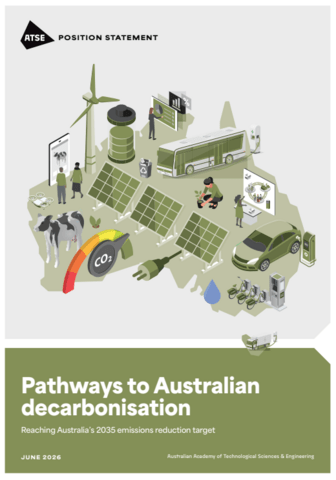
Position paper
Pathways to Australian decarbonisation
This paper presents a series of positions focused on enabling emissions reductions across all major sectors of the economy. Together, these positions are intended to support the Australian Government’s 2035 emissions reduction targets and place Australia on a credible, resilient pathway to achieving net zero emissions by 2050.
Briefing paper
Climate change and culture: reimagining an inclusive, sustainable and creative future
Climate change is driving systems toward tipping points that require urgent action, and the cost of inaction far outweighs the cost of action. Yet the case cannot be made in the language of economics alone. That is what arts and culture can do. This paper sets out placing culture at the centre of a new...
Guide
Greening AI in the public sector: an introductory handbook for procurement
As public agencies consider adopting new artificial intelligence (AI) products, it’s clear that residents and public sector staff have concerns about the environmental impacts of AI infrastructures. This handbook demonstrates that there are practical steps agencies can take to incorporate environmental performance criteria into public AI procurement, optimising sustainability while preserving quality of service.
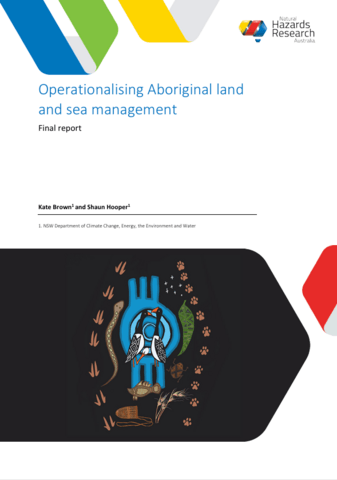
Report
Operationalising Aboriginal land and sea management
This report describes research undertaken to understand the conditions necessary to support scalable, Aboriginal community-led caring for Country. The research explored the alignment of Aboriginal knowledge and management systems with existing policy and land management structures and identified ways to enable caring for Country practices at a landscape-scale across NSW.
Report
Environmental cost of artificial intelligence: carbon, water and land footprints
This report examines the environmental footprints of the energy required to power artificial intelligence's (AI’s) rapid expansion. It frames AI’s environmental footprint as a governance and justice challenge, not only a technical problem. The benefits of AI often flow across borders and sectors, while the environmental burdens can be concentrated in specific communities and regions.