

Disability
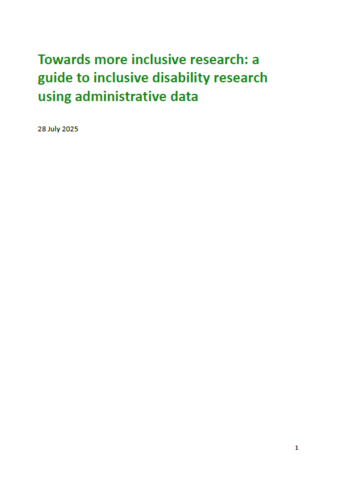
Guide
Towards more inclusive research: a guide to inclusive disability research using administrative data
This inclusive research guide educates and supports researchers on how to design, conduct, analyse and communicate research using the National Disability Data Asset (NDDA). It outlines principles and practices for conducting inclusive research using administrative data including disability-specific considerations, trauma-informed research, co-design and intersectionality.
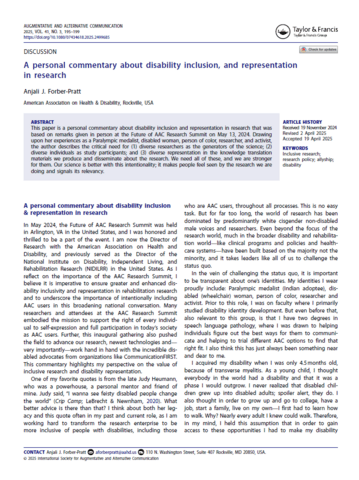
Journal article
A personal commentary about disability inclusion, and representation in research
This paper is a personal commentary about disability inclusion and representation in research. The author describes the critical need for diverse researchers as the generators of the science of augmented and alternative communication; diverse individuals as study participants; and diverse representation in the knowledge translation materials we produced and disseminated about the research.
Strategy
Disability reform action plan for government
This paper maps core elements of the proposed reform agenda for Australia's disability sector including areas such as system design, foundational supports, quality and safety regulations, pricing and payments, market management, and workforce development. It highlights the importance of engagement and communication with people with disability, their families and carers, and providers.
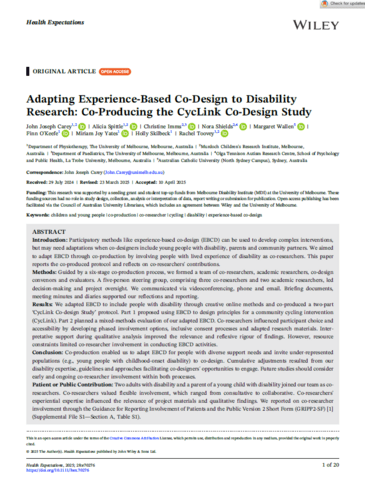
Journal article
Adapting experience‐based co‐design to disability research
This article looked at adapting experience‐based co‐design (EBCD) through co‐production by involving people with lived experience of disability as co‐researchers to work on a community cycling program (CycLink). This paper reports the co‐produced protocol and reflects on co‐researchers' contributions.
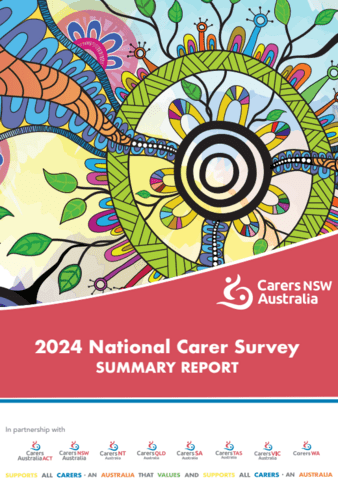
Report
2024 National Carer Survey
This report provides an overview of national findings from the 2024 National Carer Survey regarding carers’ economic and social needs, caring relationships, carers’ experiences accessing services, and their health and wellbeing as well as diverse caring experiences. The findings indicate that many carers are living in acute poverty and need urgent support.