

Technology
Alternative labels
Engineering and technology sciences
Tech
Briefing paper
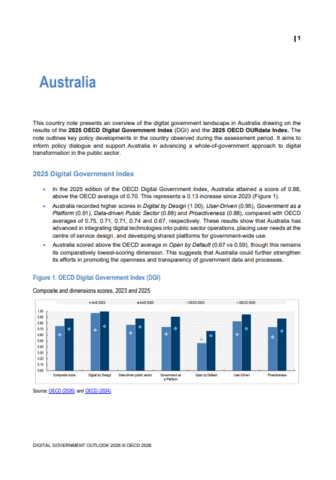
Digital government outlook 2026: Australia
This note presents an overview of the digital government landscape in Australia drawing on the results of 2025 OECD indexes. The note outlines key policy developments in the country observed during the assessment period. It aims to inform policy dialogue and support Australia in advancing a whole-of-government approach to digital transformation in the public sector.
Report
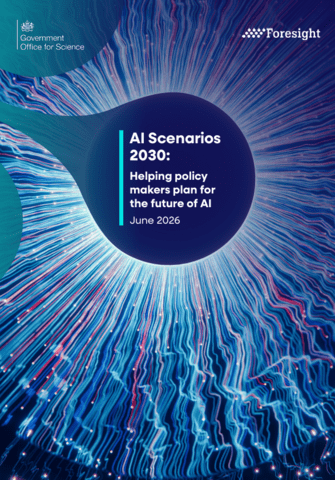
AI scenarios 2030: helping policymakers plan for the future of AI
Artificial intelligence (AI) has advanced rapidly over the past decade. It has already transformed some fields, but how the transformation will unfold and what can be done to shape it remains highly uncertain. To keep pace with these developments, this report sets out five scenarios as tools for exploring uncertainty, stress-testing and developing policy.
Briefing paper
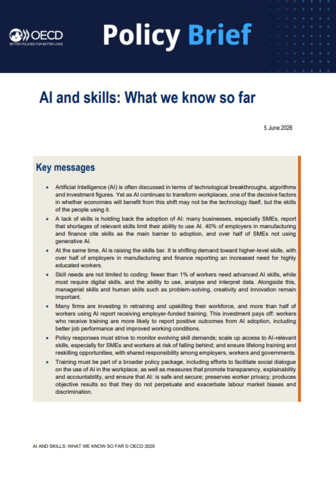
AI and skills: what we know so far
This policy brief summarises and brings together various pieces of OECD research to build a coherent narrative on what is known about artificial intelligence (AI) and skills. The policy brief highlights the importance of skills to make a success of AI and identifies several areas for policy action and future research.
Report
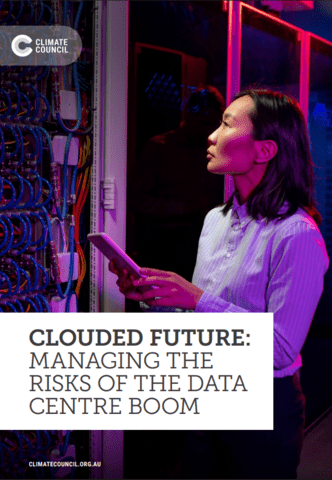
Clouded future: managing the risks of the data centre boom
A surge in Australian data centre construction driven by artificial intelligence (AI) risks pushing up power bills and climate pollution, according to this report. With more than 90 projects in the pipeline, this report proposes that every new data centre in Australia must be subject to strong standards for both its energy and water use.
Report
Environmental cost of artificial intelligence: carbon, water and land footprints
This report examines the environmental footprints of the energy required to power artificial intelligence's (AI’s) rapid expansion. It frames AI’s environmental footprint as a governance and justice challenge, not only a technical problem. The benefits of AI often flow across borders and sectors, while the environmental burdens can be concentrated in specific communities and regions.