

Policymaking
Alternative labels
Policy making
Policy
Policy-makers
Policy-making
Policymakers
Guide
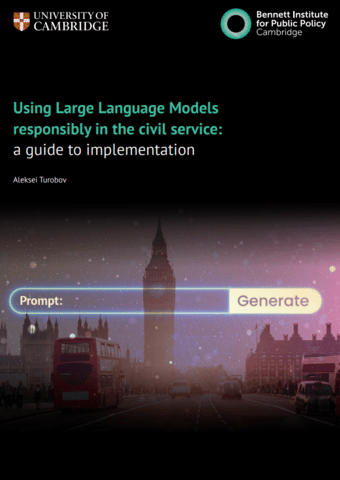
Using Large Language Models responsibly in the civil service: a guide to implementation
This guidance primarily focuses on civil service policy development, analysis and administrative functions in the UK. It establishes crucial foundations about Large Language Model (LLM) capabilities and limitations, directly informing the practical frameworks and tools provided. It concludes with a practical roadmap for implementing LLMs into civil service operations.
Policy
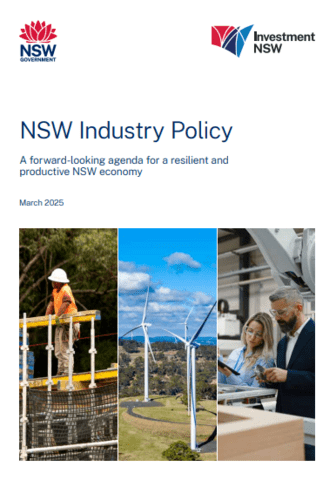
NSW industry policy
This policy sets out the long-term vision for the economic future of NSW. It focuses on strengthening the NSW economy by focussing on three connected missions: housing, net zero and energy transition, and local manufacturing. It foresees a proactive role for government underpinned by close cooperation and coordination with industry and other stakeholders.
Guide
The DIPR framework: guidance for Ministerial priority setting
This framework assists Ministers, their senior staff and departmental leaders to set priorities after considering a balanced suite of evidence and information. It is intended as guidance and can form part of a wider set of approaches for a Minister. Ultimately, the framework is guidance for more timely, more effective, better informed and more transparent...
Report
Governmental practices in protecting IP-intensive industries
Despite playing a key economic role, intellectual property (IP) industries are not protected or secured to the same degree as government agencies or critical infrastructure. This report examines how various countries have used regulatory, legal, and policy interventions to protect IP-producing entities against cyber-espionage. It encourages policymakers to be more proactive in the defence of...
Report
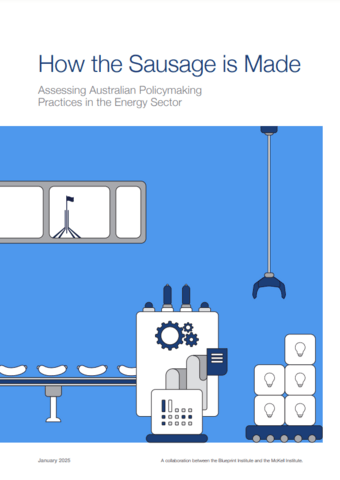
How the sausage is made: assessing Australian policymaking practices in the energy sector
This examination of policymaking in the energy sector combines research on the current state of the sector with five in-depth case studies, each measured against an assessment framework to identify areas for improvement. The report makes recommendations towards a more coordinated, evidence-based, and inclusive approach to energy policy.