

Environment
Alternative labels
Natural environment
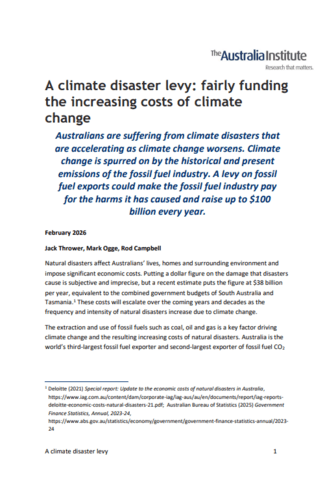
Briefing paper
A climate disaster levy: fairly funding the increasing costs of climate change
Australians are suffering from climate disasters that are accelerating as climate change worsens. The extraction and use of fossil fuels is a key factor driving climate change and the resulting increasing costs of natural disasters. This paper proposes a levy on fossil fuel exports could make the fossil fuel industry pay for the harms it...
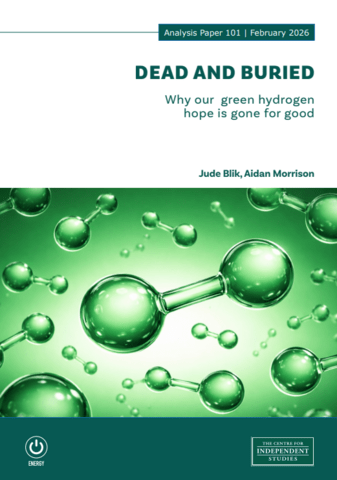
Report
Dead and buried: why our green hydrogen hope is gone for good
Green hydrogen is often heralded in Australia’s net zero ambitions, but this paper posits that it is not viable today and won’t be in the foreseeable future. The paper examines why green hydrogen will likely remain prohibitively expensive, why projects are stalling and how the recently announced Orica subsidy exposes Australia’s strategy as untenable.
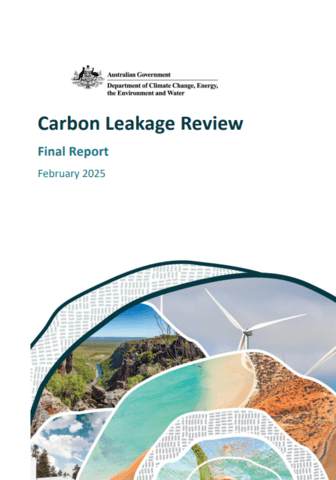
Report
Carbon leakage review
The final report of the carbon leakage review undertaken between 2023 and 2025. Carbon leakage occurs when domestic production moves to countries with weaker climate policies. The review assessed potential measures to mitigate this risk and whether additional policies are needed. It found existing policy measures mitigate leakage risks in the short to medium term.
Report
The case for pricing pollution
Australia faces significant challenges to its long-term economic prosperity and environmental sustainability – its current policies to reduce carbon emissions are inefficient and it is not on track to meet targets. This report sets out two policy proposals that can deliver emissions reduction and economic renewal together: a polluter pays levy and a fair share...
Report
From wildfire risk to resilience: the investment case for action
Wildfires are now outpacing existing suppression systems and have become one of the most destructive and costly climate-driven risks globally. This white paper highlights that continuing to prioritise suppression and post-disaster response is no longer sufficient. It presents a framework for shifting towards prevention-focused, long-term wildfire resilience by making risk reduction measurable, priceable and financeable.