

Policymaking
Alternative labels
Policy making
Policy
Policy-makers
Policy-making
Policymakers
Guide
Energy efficiency policy toolkit 2025
The toolkit offers a framework to support governments in designing and implementing effective energy efficiency measures by combining policies across three core pillars: regulation, information and incentives. It incorporates a wide range of case studies and provides 10 strategic principles to help guide policymakers to enhance and expand their energy efficiency policies and programs.
Book
Wellbeing and policy: evidence for action
This book surveys and synthesises recent developments in wellbeing science and policy to highlight key lessons learned and to offer actionable insights for policymaking. It examines the state of the art on wellbeing policy frameworks in diverse contexts, documenting interventions by governmental, private or non-governmental organisations. Case studies include Australia.
Report
The future of Generative AI in policy work in Australia
A national examination of the current and anticipated use of Generative AI (GenAI) in policy work. It sought to understand how senior Australian public servants perceived the strengths and weaknesses of these applications, the potential of GenAI for policy work, and what needs to happen to make GenAI safe to use in policy work.
Report
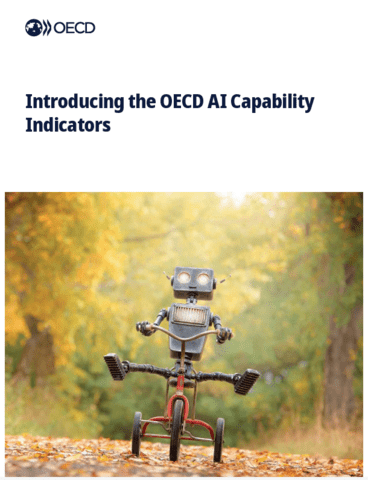
Introducing the OECD AI Capability Indicators
This report introduces the OECD’s beta AI Capability Indicators, designed to assess and compare AI advancements against human abilities. The indicators cover nine human abilities: language, social interaction, problem solving, creativity, metacognition and critical thinking, knowledge, learning and memory, vision, manipulation and robotic intelligence. They provide a framework for policymakers to understand AI's potential impacts.
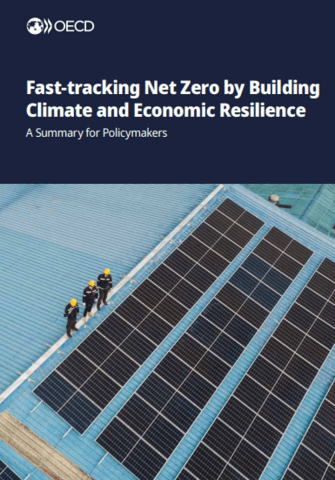
Report
Fast-tracking net zero by building climate and economic resilience: a summary for policymakers
This summary report for policymakers shows that reaching net zero is still possible but requires urgent action. It also discusses the importance of public support; trade, investment and finance; climate adaptation; and bridging knowledge gaps to improve the effectiveness of climate policies.