

Justice
Report
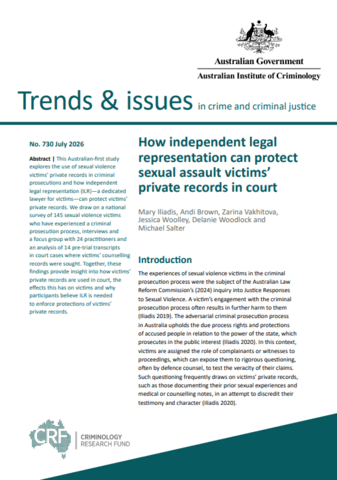
How independent legal representation can protect sexual assault victims' private records in court
This Australian study explores the use of sexual violence victims’ private records in criminal prosecutions and how independent legal representation – a dedicated lawyer for victims – can protect victims’ private records. The findings provide insight into how victims’ private records are used in court and the effects this has on victims.
Report
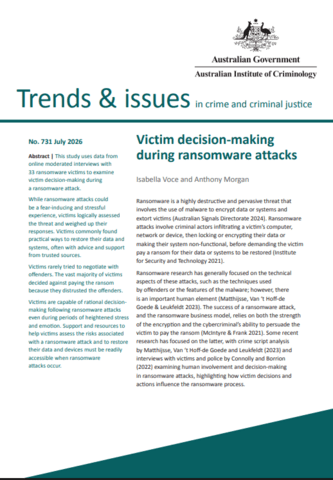
Victim decision-making during ransomware attacks
This study uses data from online Australians in moderated interviews with 33 ransomware victims to examine victim decision making during a ransomware attack. It finds that support and resources – to help victims assess the risks associated with a ransomware attack and to restore their data and devices – must be readily accessible when ransomware...
Report
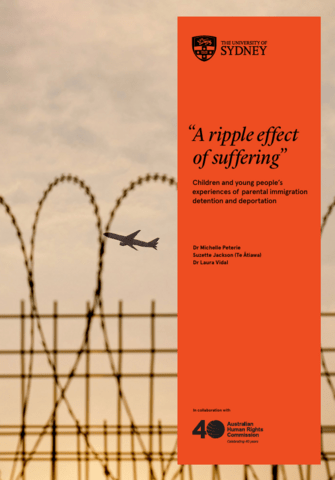
"A ripple effect of suffering": children and young people’s experiences of parental immigration detention and deportation
This report highlights the voices of children and young people whose parents and caregivers are affected by immigration detention and deportation. It argues their stories paint a different picture to the usual view presented in the media, showing how children suffer the consequences of both adult and government actions through no fault of their own.
Report
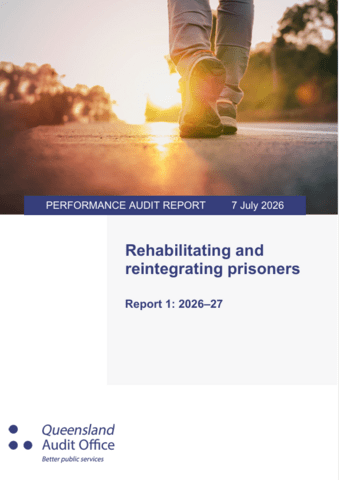
Rehabilitating and reintegrating prisoners
This report assesses how effectively Queensland Corrective Services plans for and facilitates the rehabilitation and reintegration of prisoners in custody. It finds a more effective delivery model for case management is needed and makes five recommendations for improvement.
Report
Cybercrime in Australia 2025
The Cybercrime in Australia series aims to provide high-quality and robust evidence on self‑reported cybercrime victimisation, financial losses and other harms, help-seeking behaviour and, importantly, changes over time. This report offers insights into the experience of cybercrime among Australian individuals and small to medium businesses. One in five respondents experienced multiple types of cybercrime.