

Justice
Report
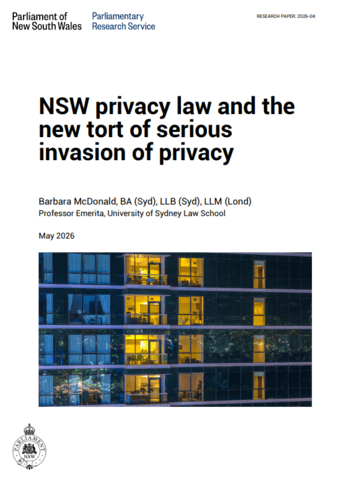
NSW privacy law and the new tort of serious invasion of privacy
In 2025, the Australian Parliament introduced a new statutory tort enabling individuals to sue for serious invasions of privacy. This paper contextualises the operation of the new statutory tort. It explains the different dimensions of privacy, outlines the limits of existing common law and statutory protections, and presents the new tort’s elements, defences, remedies and...

Report
Domestic and family violence experienced by children and young people in NSW
Children and young people are more than witnesses to domestic and family violence (DFV); they experience DFV and its impacts directly. This paper considers progress in embedding the understanding of children and young people as victim-survivors of DFV within New South Wales policy and practice, looking at social services, education, justice and child protection.
Report
Rapid review of Victoria’s firearms laws: final report
This rapid review of Victoria’s Firearms Laws was conducted in accordance with its Terms of Reference that required reforms that protect all Victorians, while recognising the legitimate need for some sectors of the community to possess, carry and use firearms. This report presents the findings and recommendations of this review. It made 16 recommendations.
Report
Do females known for online child sexual exploitation differ from males? Group characteristics and recidivism
Despite increasing research on online child sexual exploitation, limited research compares female and male perpetrators. This study examined 116 females and 116 age-matched males known to police in Victoria for online child sexual exploitation on group characteristics and risk of reoffending. The findings have implications for policy and highlight several important avenues for future research.
Report
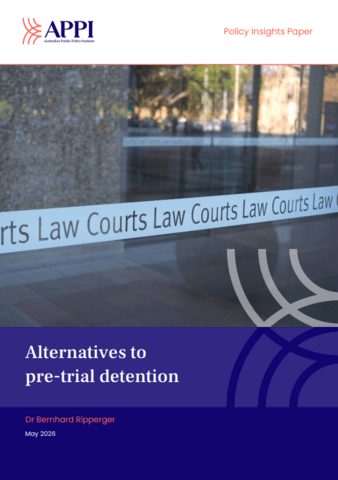
Alternatives to pre-trial detention
The report sets out alternatives to pre-trial detention for New South Wales centred on expanding structured bail supervision and developing community-based approaches to managing individuals outside of full-time custody. Drawing on successful models, the research shows these approaches can reduce pressure on the prison system and more effectively and efficiently deliver corrective services.