

Employment
Alternative labels
Jobs
Work
Report
Australia’s social and community services workforce: characterisation, classification and value
Over 300,000 people work in Australia’s social and community service industries, mostly women in non-government organisations. This report provides detailed insight into what these workers do in their work, and how their work is characterised, classified, and paid in the context of the regulatory arrangements.
Discussion paper
Non-competes and other restraints: understanding the impacts on jobs, business and productivity - issues paper
The Competition Review is inviting public submissions to this issues paper. The paper covers emerging concerns relating to non-competes and other restraint of trade agreements between businesses and workers, and no-poach and wage-fixing agreements between businesses.
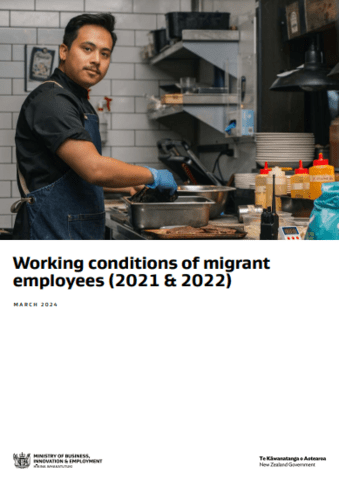
Report
Working conditions of migrant employees (2021 and 2022)
This report analyses data from the New Zealand Ministry of Business, Innovation, and Employment’s (MBIE’s) Migrant Surveys 2021 and 2022 for respondents who were waged or salaried employees. The analysis aims to identify the extent to which migrant employees are experiencing adverse working conditions, and the particular migrant groups that are more at risk.
Fact sheet
Right to disconnect: fact sheet
The Fair Work Legislation Amendment (Closing Loopholes No. 2) Act 2024 introduces a high-level right to disconnect for all national system employees into Part 2-9 of the Fair Work Act 2009 (the Act). Employees will now have a right to not respond to contact from their employer outside of their working hours, unless doing so...
Research Summary
Climbing the wage ladder: linking job mobility and wages
Real wages have declined over the past 4 years in Australia, with inflation outpacing wages growth. This research note shows that reforms to address unnecessary and artificial barriers to mobility in labour and housing markets may be one of the best ways to get wages moving for Australian workers.