

Policymaking
Alternative labels
Policy making
Policy
Policy-makers
Policy-making
Policymakers
Report
From agenda setting to policy adoption
Policymakers face a variety of barriers to getting an issue on the agenda. This report focuses on the agenda setting and policy adoption phases of the policymaking lifecycle. It provides policymakers with a practical framework for strategic agenda management, highlighting strategies to increase the likelihood that policies are adopted.
Briefing paper
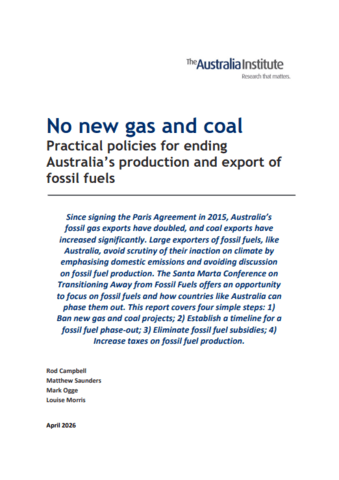
No new gas and coal
Since signing the Paris Agreement, Australia’s fossil gas exports have doubled, and coal exports have increased significantly. The Santa Marta Conference on Transitioning Away from Fossil Fuels offers an opportunity to focus on how countries like Australia can phase out fossil fuels. This paper covers four steps to phase out fossil fuels with minimal economic...

Discussion paper
Artificial intelligence and evidence-informed policy – emerging challenges and opportunities: discussion paper
This discussion paper examines the intersection of artificial intelligence (AI) and evidence-informed policymaking, outlining how AI can support problem identification, policy design and implementation. It emphasises that AI augments rather than replaces human judgement, while highlighting its potential to expand the evidence base and support more timely, responsive decision-making in complex health contexts.
Briefing paper
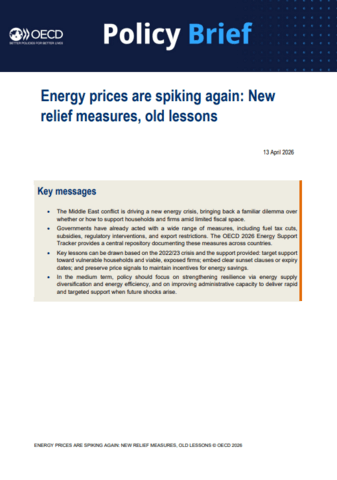
Energy prices are spiking again: new relief measures, old lessons
This brief summarises the support measures governments have implemented in response to the sharp rise in energy prices linked to the Middle East conflict. Many OECD countries have moved quickly to provide support, most often through fuel-tax cuts and other price-support measures, while targeted income support and regulatory interventions have been used less widely.
Guide
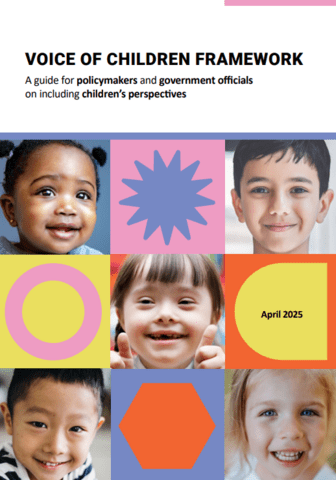
Voice of children framework
A practical guide to help Australian government officials ensure children’s perspectives are meaningfully included in the development of policies and programs that affect them, particularly in early childhood education and care settings. It includes best practice guidance on how and when to consult with children, and considerations for safe and inclusive consultations.