

Social issues
Alternative labels
Social sciences
Social policy
Social problems
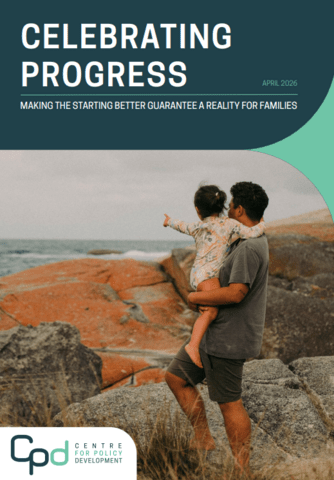
Report
Celebrating progress: making the Starting Better Guarantee a reality for families
The Starting Better Guarantee was a national goal to make Australia the best place to be a child and raise a family. It proposed an entitlement to a set of high-quality, affordable and connected services in the early years. This report shows the wins achieved and the priorities ahead to realise the Guarantee in full.
Strategy
SNAICC sector transformation: principles framework
The framework provides a roadmap for mainstream organisations to transition out-of-home care services to Aboriginal Community Controlled Organisations, placing self-determination, cultural authority and community control at the centre of child and family services. The aim is to ensure Aboriginal and Torres Strait Islander communities design, govern and control the services that impact their children and...
Report
Settlement Engagement and Transition Support program
The Settlement Engagement and Transition Support program is an early intervention program intended to contribute to humanitarian entrants and other eligible vulnerable migrants and communities. The audit reports on the effectiveness of the management of the grants in achieving the program objectives. It finds program performance has been mixed in a number of areas.
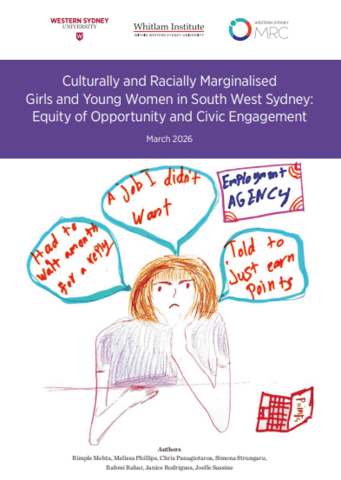
Report
Culturally and racially marginalised girls and young women in South West Sydney
This report is the outcome of research conducted with culturally and racially marginalised girls and young women from migrant and refugee backgrounds in South West Sydney in 2025. The research aim was to explore the barriers and enablers impacting girls and young women's civic engagement and their aspirations within Australian society.
Report
National Disability Insurance Scheme participation by younger people living in residential aged care
By linking aged care and National Disability Insurance Scheme (NDIS) data, this report provides unique insights about younger people living in residential aged care. Key findings include that funding for specialist disability accommodation is used by less than one in three of the NDIS participants who have it.