

Economics
Alternative labels
Economy
Economic management
Macroeconomics
Economic policy
Guide
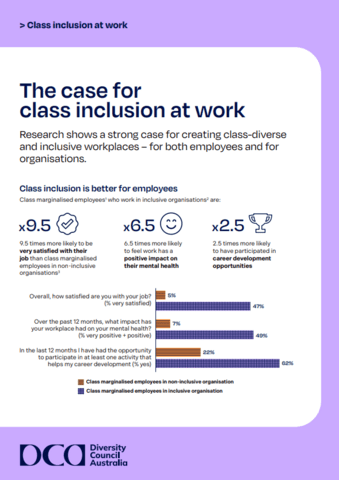
The case for class inclusion at work
A set of four guides on class inclusion at work present how organisations can recognise and respond to classism and bias in the workplace. Research shows a strong case for creating class-diverse and inclusive workplaces. The guides define class bias and present the case for class inclusion, understanding class at work, and what leaders can...
Report
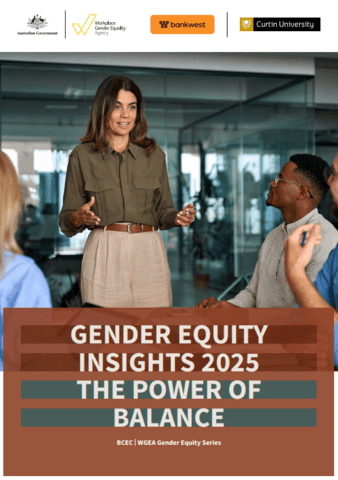
Gender equity insights 2025: the power of balance
This report investigates what drives a gender-balanced workforce – having at least 40% women and 40% men in the workforce. The findings are drawn from a dataset of more than 5.1 million Australian employers. The report makes the case that gender equity is not simply a matter of fairness and sets out a clear agenda...

Discussion paper
Made & grown: the future of food biotechnology & biomanufacturing in Australia
This report showcases how biotechnologies are increasingly being applied across food supply chains, provide value-added opportunities in traditional agriculture and develop new food production systems. The report positions emerging biotechnologies and biomanufacturing as Australia’s best and under-appreciated opportunity to strengthen food security and national resilience, while also opening up substantial economic opportunities.

Report
State of electric vehicles 2025
This report outlines the sales, availability, market growth and charging infrastructure of electric vehicles (EVs) in Australia in the 2024–25 financial year. It also provides an assessment of the EV transition with a national scorecard on federal, state and territory government policies. Despite progress, the report highlights more needs to be done to achieve EV...
Report
Australia's fertility decline: evidence and policy experience
Declining fertility rates are a worldwide phenomenon, with Australia no exception. Australia’s fertility rate has fallen to a record low of 1.5 births per woman. This report examines both the drivers of fertility decisions and the lessons from past policy interventions. It finds the decline in fertility has been driven by three factors.