

Economics
Alternative labels
Economy
Economic management
Macroeconomics
Economic policy

Report
A decade of impact: a multi-level analysis of WiSPP’s impact on individuals, institutions, and the scientific community
A report evaluating the impact of Women in Science Parkville Precinct (WiSPP) which was formed in 2014 to address gender inequity among five of Australia’s largest medical research institutes in Parkville in Melbourne. The report concludes that a strong foundation has been laid but there is a need to continue to advance equality in medical...
Report
Our Gen AI transition: final release
This report includes a final analysis paper that explores how the implications of generative artificial intelligence (Gen AI) vary across the workforce, including exposure, experiences and perspectives, through cohort and intersectional lenses. The second part of the report provides the technical detail of how the key pieces of analysis were undertaken in the overarching report...
Report
Accounting for your super: ASIC’s review into the financial reporting and audit of super funds
This report summarises findings from Australian registrable superannuation entities financial reporting and audit surveillance for the financial year 2024–25. It reveals inconsistent approaches to disclosing investments, limited disclosure of sponsorship and advertising expenses, and insufficient audit evidence obtained in the valuation of some investments. Areas for improvement are highlighted.
Report
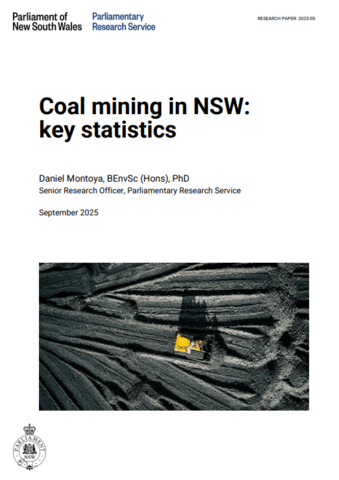
Coal mining in NSW: key statistics
This paper identifies all coal mines in New South Wales (NSW) which are operational or could become operational in future, and their current and proposed timeframes of operation. It also sets out key economic statistics on employment, production, exports and royalties. NSW has 35 operational coal mines located across the five major NSW coalfields.
Report
Economic security in retirement: how life events affect older Australian women
This report shows how Australian women’s economic security in retirement is often shaped by life events such as separation, informal care demands and family violence that can set women back financially. It proposes that with the right policy settings, gender gaps can be addressed to put more women on track for economic security in retirement.