

Economics
Alternative labels
Economy
Economic management
Macroeconomics
Economic policy
Report
State economic scorecard 2026
The scorecard assesses and ranks the performance of each Australian state across ten economic indicators: annual growth in per capita gross state product, annual wage growth, jobs growth, retail turnover, tax burden, debt burden, productivity growth, business investment, rental affordability and energy affordability. Western Australia is the best performing state and New South Wales the...
Briefing paper
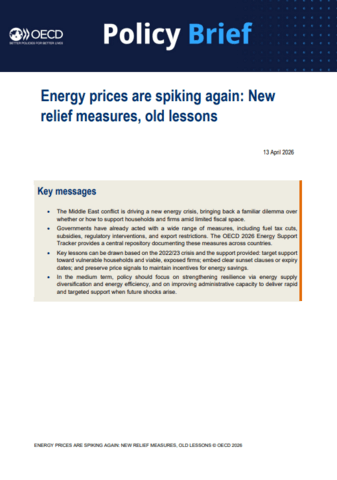
Energy prices are spiking again: new relief measures, old lessons
This brief summarises the support measures governments have implemented in response to the sharp rise in energy prices linked to the Middle East conflict. Many OECD countries have moved quickly to provide support, most often through fuel-tax cuts and other price-support measures, while targeted income support and regulatory interventions have been used less widely.
Briefing paper
Analysis of proposed LNG export windfall levy
This analysis presents modelling of the impact of the potential windfall levy – an additional 25% tax on Australia’s oil and gas industry – on post-tax project economics in Australia. It assesses the corresponding implications for Australia’s fiscal attractiveness and competitiveness relative to peer regime. It finds that imposing the windfall levy would make new...
Report
Workforce pressures facing the food and grocery manufacturing sector
This report examines workforce pressures facing Australia’s food and grocery manufacturing sector, setting a focus for long-term solutions. The report provides a macro assessment of workforce challenges affecting the sector. Key occupations in focus for this report include food and drink factory workers; packers; forklift drivers; purchasing and supply logistics clerks; and manufacturing production managers.
Report
State of energy policy 2026
The report provides a comprehensive review of global energy policy changes in 2025, tracking more than 6,500 policy measures across 84 countries. The report highlights changes in more than 200 areas of energy policymaking, including government spending, emergency stockholding, energy access, energy regulation and climate pledges.