

Economics
Alternative labels
Economy
Economic management
Macroeconomics
Economic policy
Research Summary
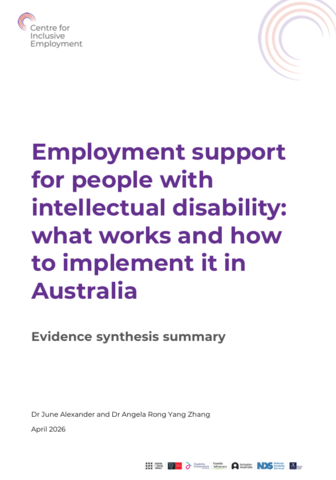
Employment support for people with intellectual disability: what works and how to implement it in Australia
Australians with intellectual disability face one of the lowest rates of open employment. This summary distils the evidence on what works, what doesn’t, and how stakeholders can take practical steps to close the employment gap, including helping employers design jobs and supports that suit the person.
Report
Growth in the new economy: towards a blueprint
This report summarises a set of moves and dilemmas that shape growth strategies in the new economy, as well as key drivers, barriers and opportunities for accelerating growth by 2030. It highlights how a convergence of deep structural transformations is shaping the contours of the new economy, creating both new risks and opportunities.
Evaluation
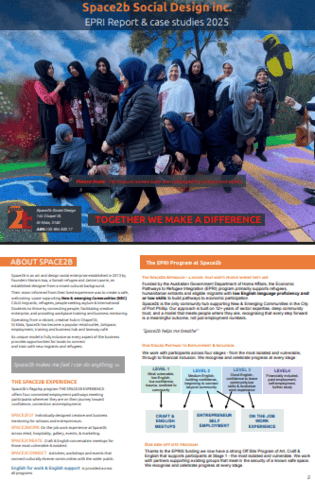
EPRI report & case studies 2025
This report presents the impact and case studies of the Economic Pathways to Refugee Integration (EPRI) program delivered by Space2b Social Design in St Kilda, Victoria. Its model addresses both social isolation and barriers to employment. The evaluation demonstrates the critical importance of the EPRI program to engage those most vulnerable.
Report
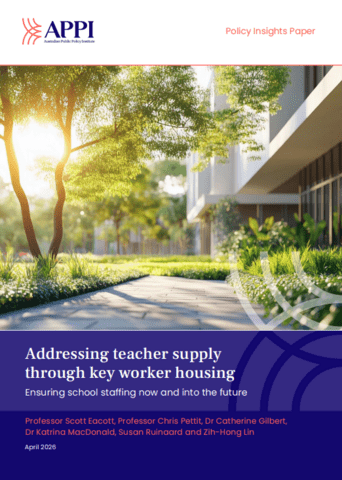
Addressing teacher supply through key worker housing
Housing affordability is undermining efforts to address teacher shortages in New South Wales. The policy challenge for government is securing the right qualified teachers where they are most needed in the system. This report analysed teacher workforce and housing shortages to set out clear policy opportunities for government action to supply key worker housing.
Report
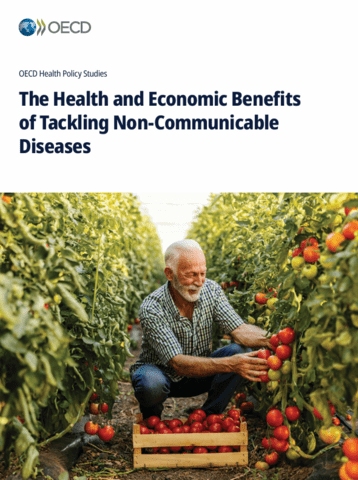
The health and economic benefits of tackling non‑communicable diseases
This report provides a comprehensive assessment of the burden of non-communicable diseases across OECD and European Union countries, bringing together the latest evidence on disease burden, risk factors, health system performance and economic impacts. The report identifies country-specific priority areas for action.